
This was another highly requested topic, as voted for on my Instagram. The behind the scenes, things passengers don't see and even guidelines that you may not know exist but could get you offloaded on a flight.
The Crew Rest Area
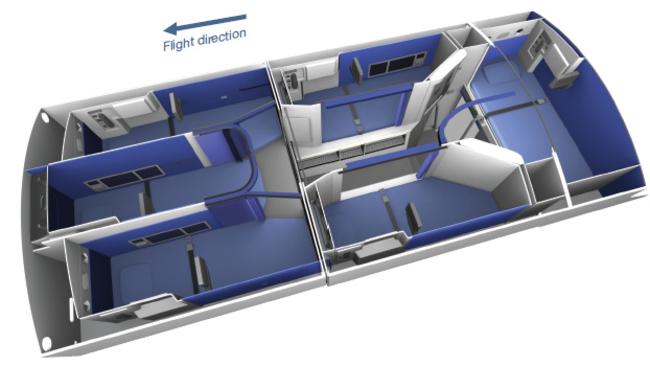
Starting off strong is the crew rest areas, I mentioned about this on a previous post but crew rest is an area that passengers rarely/never see. On the majority of planes I flew on the crew rest area was above the passenger cabin, basically in the overhead lockers right at the back of the aircraft. Most people don't even know it exists; if you time it right as a passenger and hang around in the economy galley you might see the crew come out of a door into the galley half way through the flight. That will be the crew rest area. I used to love the bunks, so cosy and small. Especially with light turbulence, I found it so relaxing. The photo below is of the A350 crew rest. This whole compartment is accessed through a door in the economy galley and lives in the overhead locker of the middle back rows of economy. The bunk that spans the width of the crew rest at the bottom is the bunk above the door to enter and exit. As you can see it is very compact and cosy. As you can see there are 6 bunks, so half the crew go on rest and the other half stay in the cabin monitoring. In each crew rest bunk is an oxygen mask, seatbelt and light, very similar to the overhead panel in economy. Each bunk also has a curtain around it for privacy and we got provided with linen and if your lucky a duvet and pillow:)
Noticing the small things
Something else passengers might not know is that if cabin crew sense a person is already too drunk on boarding they can refuse that passenger to board. Most people don't realise this is a policy on airlines, however if you are in the airport having alcoholic drinks before a flight its best not to go overboard, if you get to the door of the aircraft and the crew sense a passenger has had too much already they can either refuse to carry that passenger or reduce/ not serve them alcohol for the duration of the flight. This has happened to me once where I was at the boarding door of the aircraft and a passenger came on very drunk, I mean I could smell the alcohol on him. He was travelling in upper class (Virgin's business class cabin) so it wasn't easy to talk to him because 1. he paid a lot for his seat but 2. he was drunk and you can't reason with drunk people. Anyway my manager offloaded him after discussing with the captain because he was going to create us so much more work and would probably argue with us when we would deny him alcohol. On the theme of alcohol it is also the crews responsibility to monitor alcohol intake during the flight. This is kind of impossible with the number of passengers however if a crew member notices any particular passengers that keep asking for more to drink or they seem to be drinking quickly, we can either say the bar is closed so they can't drink anymore or we can water down the drink to add more mixer and less liquor, or more ice. There is always a solution, because no one wants to sit around a drunk person or deal with them.
Safety Silence
As a passenger have you ever sat at an exit row opposite a crew member and noticed they stop chatting and sit in silence during take off?
Something subtle that most passengers don't realise is that during take off the cabin crew are silently reviewing emergency procedures and commands. One of my favourite positions to work was in the middle of the aircraft at the 3rd exit door of the aircraft. This position was also where I sat for take off and landing and was directly opposite passengers sitting in the exit row of economy. When I would sit down for take off sometimes it was nice to have a chat with the passengers opposite me and find out why they were travelling to whichever destination we were going. On Virgin specifically just as we would line up for take off we would hear a 'double ding' which sounded like pressing a call bell twice which signalled to us we were about to take off. At this point I would stop talking and in my head go through the emergency commands and look at my door to make sure I was ready in case of evacuation. You will notice all the crew do this during take off and landing. Even though we have all been trained in emergency evacuations it is important to be ready and know exactly what to do without getting flustered. I always found it helpful to run through it in my head during take off so I felt confident and ready.
I found this especially useful on landing because most of the time I was so tired after working all night and sitting in my crew seat for landing would honestly make me want to fall asleep, so for me going through the procedures was even more important because I was so tired. It also helped me to become more alert, having something to focus on whilst sitting down.
0 Comments